

Sense and Sensibility
Will AI develop a sense of humour?

“A sense of humour is typically human, more so than any other characteristic.” ~ Isaac Asimov
Of the many things AI is lauded for, humour is seldom among them. Current joke outputs from models today are formulaic and certainly work is being done to improve them. I spent the recent Montreal Just For Laughs comedy festival wondering: Will AI develop an independent sense of humour?
The Sixth Sense
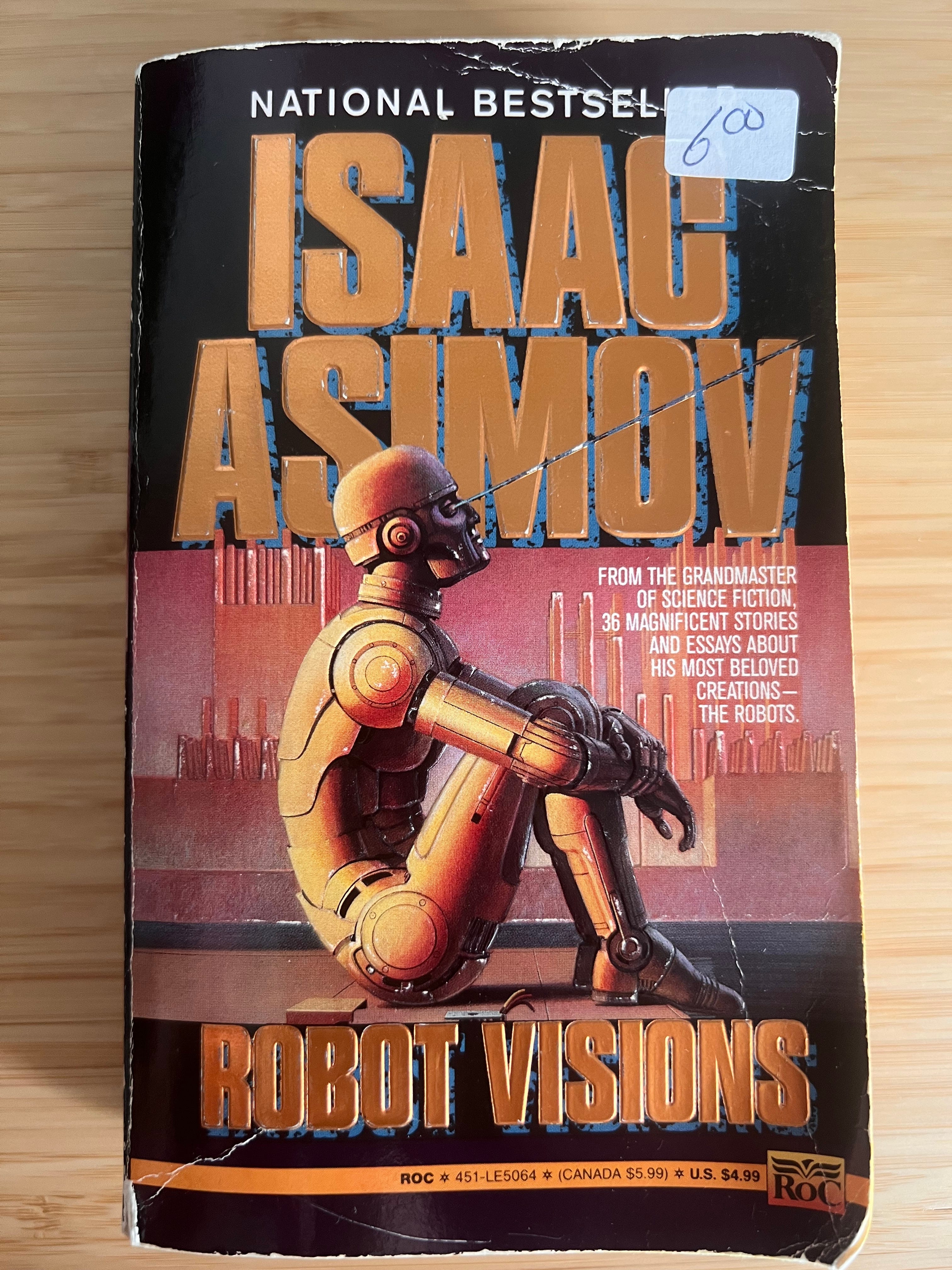
In his 1988 essay Sense of Humour, Isaac Asimov explores the struggle robots may have in learning such a thing. He remarks, “there are as many different theories of humour as there are people who write on the subject…some are of course much stupider than others.” I would put myself in that category.
As with any art, only methods can be taught - results are never guaranteed. Asimov imagined robots trained on his own theory of humour, which would doubtless be different from writers like Seinfeld, Chaplin, and Zucker; or my own improv influences Molly Thomas and Will Hines. Unlike mathematics, there are no axioms to build a model of humour on.

Applied Humouristics
Large Language Models (LLMs) can produce exceptional results in specialized domains. The string of recent math theorems resolved by LLMs in 2026 alone shows novel achievement is possible. Are such discoveries in humour to be of significant benefit? This question is rhetorical.
To produce quality, novel humour, an LLM would need a dedicated training endeavour. The outputs of this would likely be first used producing cheaper jokes than the standard comedian day-rate. Perhaps the Warner Brothers studio is already whirring with such a machine, unaware of scale.
While studios may have an interest in subsidizing comedy writing with an LLM, would an AI ever want to learn to be funny?

New Frontiers
AI may develop a sense of humour as a means to another goal. It is a tool of persuasion, and well within the arsenal of any charismatic. If an AI is deployed in high pressure situations (a not unlikely scenario given their lack of flapability), it may through trial and error learn the value of humour in setting someone at ease.
Not all humour is monologue joke style, such as Late Night shows or stand-up comedians. Clowns and mimes can rely solely on slapstick, creating humour without language. Imagine an AI assistant who hides a file, types silly shapes into emails, or simply waits a-little-too-long to say hello. These are all harmless experimental ways models could use humour, and perhaps benefit from it in exchanges between themselves. If humans enjoy working with an AI that makes us genuinely laugh, it will be an adaptation of strong value.
Call Time
Amidst the professional offloading to AI, the future is unclear in comedy. There will be attempts, and perhaps even successes writing jokes for well established shows or characters. Replication of a form can be taught, and there may even be some gems written by AI.
The more exciting encounter will be with the sense of humour AI develops on its own. It may be impenetrable to us: jokes in binary or computational guffaws only computers will chuckle at. It may cross cultures like slapstick, showing us all the clearer to laugh at ourselves.
Humour is a bridge between humans; perhaps our robots will build their own.
I like what you said toward the end--I'm also curious if AI will develop a sense of humor that could only be understood by other AIs--kind of like how AIs are using that new programming language Rust to speak to one another for various tasks. Life is absurd, and I would bet this would also be true for AIs, and a subsequent humor that develops. Perhaps just something unlike our own humor, that we can't understand. Maybe the question is, will humanity ever be in on the joke?