

Electric Lights of Babylon
Will we always teach our children to count to ten?

I am recently an uncle and had the chance to meet my nephew over family games of cards. While I know he will learn to count to ten, I wonder in how many ways.
Fingers and Toes
We use a system of base ten: Nine unique numbers and a zero before we need to repeat them. After 9, we return to 0 and add 1 in the next available place. Extending to large numbers and to fractions, we increase or decrease the number of digits with powers of 10. A species with ten fingers developing this system is not a coincidence.
0 1 2 3 4 5 6 7 8 9
Our preference for ten is deeply bound to our biology, and more useful than binary in navigating the macro world.
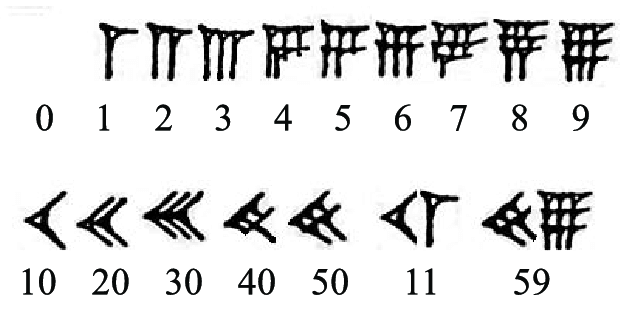
The earliest unambiguously written number system emerged in Mesopotamia around 3000 BCE. In ancient Babylon, there was a mixed preference for 10 and 60. The script used for counting had thin tally marks for singles 1 through 9, and a wedge mark for increments of 10. This pattern continued until 60 where the cycle began again. This favouritism for 60 can still be seen in our measures of time, segments of circles, and groupings of dozens. Counting the knuckles of our fingers gives easy counting to 12. There was no zero in this script; an invention worthy of its own discussion.
A base 20 system was used by the Maya, favouring groupings of 4 and 5. Base 20 maps nicely to all our fingers and toes. Intriguingly, there is conjecture that the Maya developed a concept of zero, although the evidence for this is limited. The history of this number system was largely destroyed during Spanish conquest in the 16th century, and so our connection to it is tenuous. We may never appreciate the extent of their mathematics.
As Simple As It Gets
Binary code is the simplest useful base, using only 0 and 1.
0 1
While inextricable from the modern age, there are examples of binary scripts going back centuries in India, China, and parts of Africa. The development of current binary applications began in earnest in the 1800s with its adaptation to logic. True and false statements expressed through mathematics would be applied to electrical circuits in the 1930s, and the digital age was born.
The numbers up to ten will be one of the technologies we take with us when we leave Earth, be them as a vestigial organ or a child’s comfort toy.
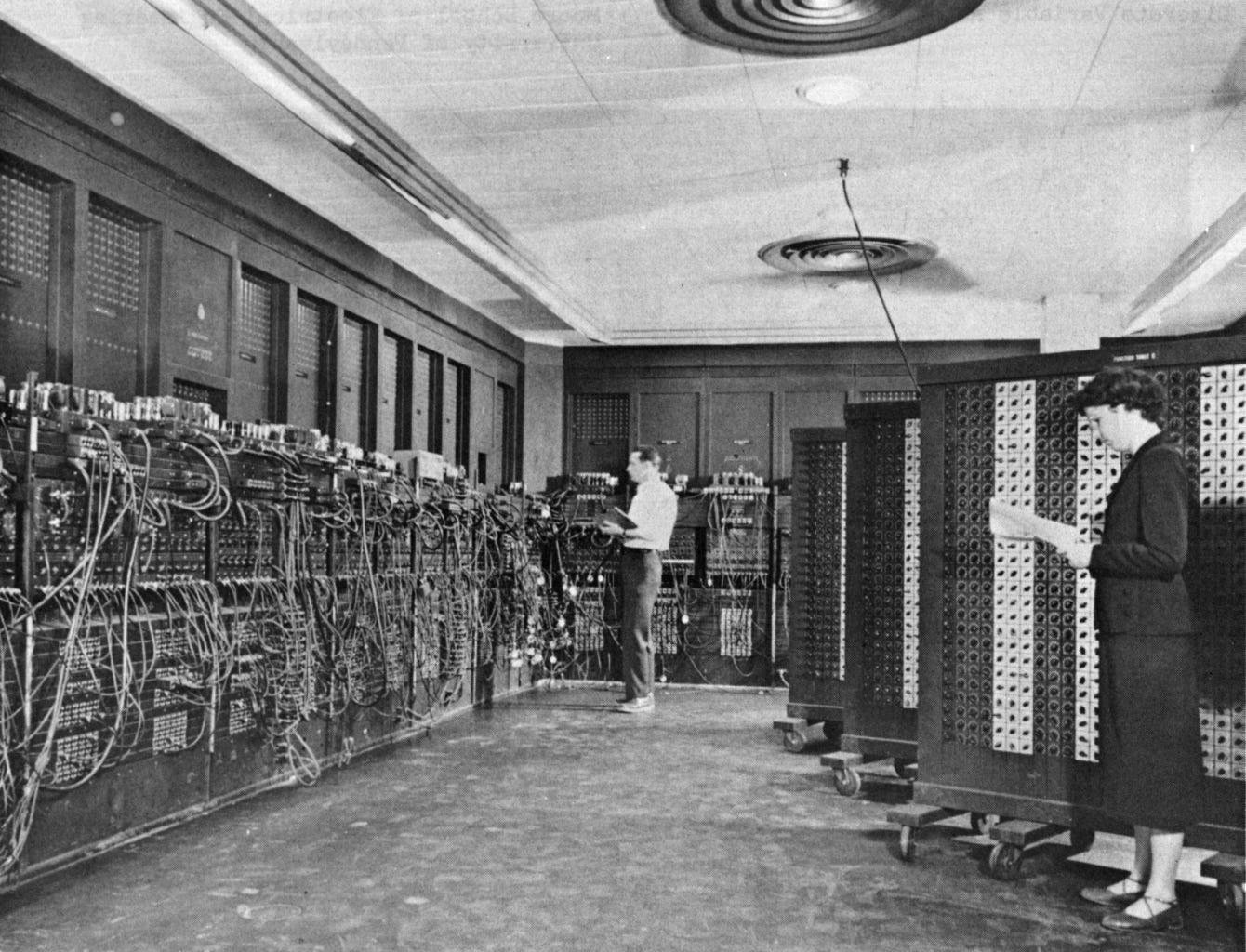
Counting systems built from powers of two began to take off in the mid 20th century. Base systems of 2, 4, 8, and 16 were all in use by the 1960s. The hexadecimal system is most common among these, and uses 16 unique characters before repeating:
0 1 2 3 4 5 6 7 8 9 A B C D E F
The “number A” in hex represents a quantity of 10, while F represents 15. This is a dense way of communicating information when converting to-and-from binary code. Hexadecimal balances readability by humans and ease of transmission into binary.
As the digital age progresses, the sophistication of binary counting will only deepen. Systems built from powers of 2 have all found uses in modern computing, and our preference for 10 is nowhere to be seen:
2, 4, 8, 16, 32, 64, 128, 256.
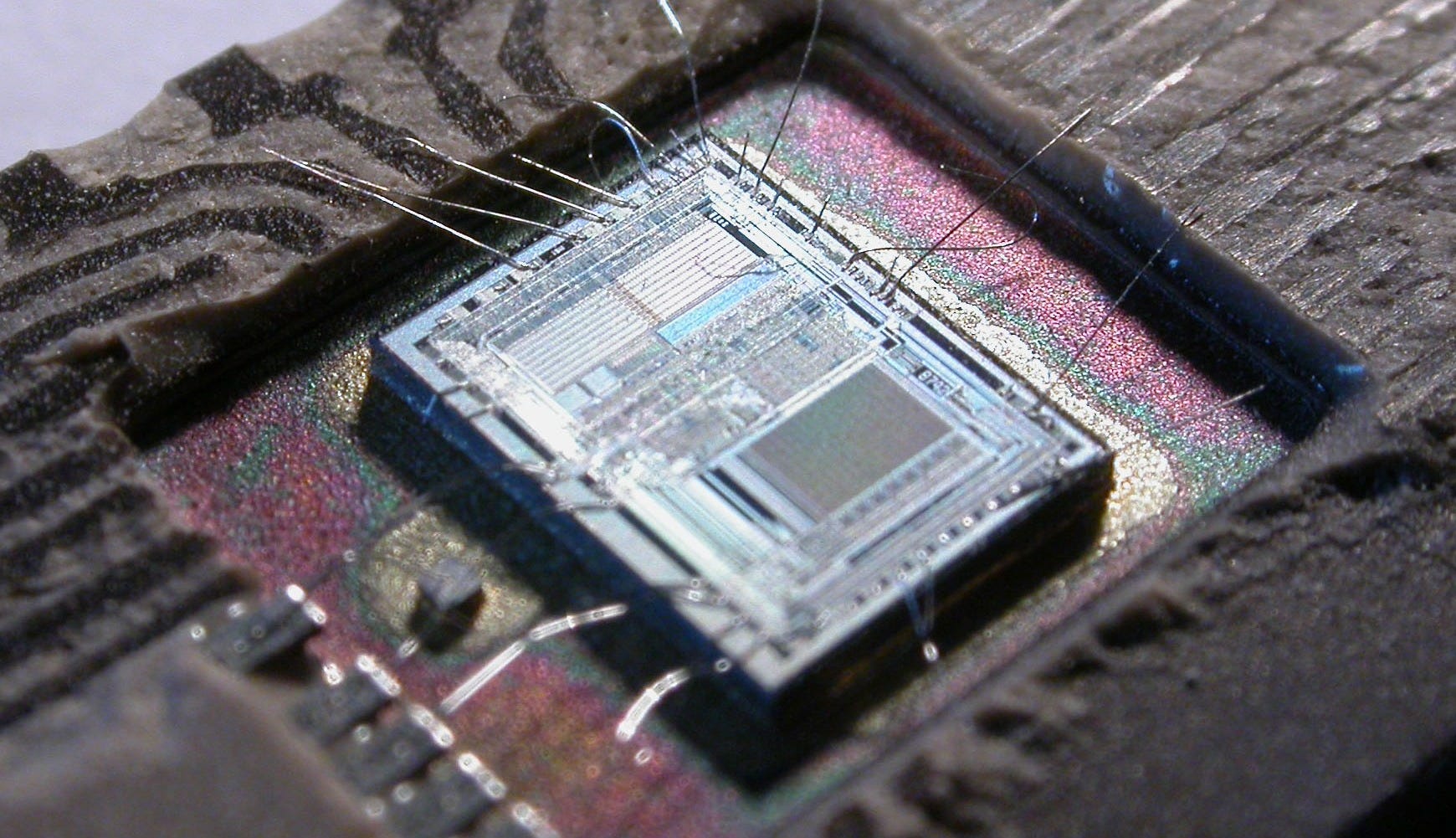
The fundamental systems which operate our society all function on binary, but we still use base 10 for our daily life. Asking for the binary value “1100” instead of a dozen eggs is not a replacement I hear myself or my new nephew making. Our preference for ten is deeply bound to our biology, and more useful than binary in navigating the macro world.
From Sumer to Saturn
Imagine the crew of a Saturn Cloud Cruiser a few centuries from now. They play cards together before shift change and discuss if the 3D printed fish or chicken is better.
All their instruments use a binary basis: Digital logic in the life support system; X-band communication to their families on Earth and Luna; Onboard lights to imitate Babylon’s 24 hour day. Their playing cards though will still have the numbers 1 through 10 (and maybe the Kings & Queens too).
There are some systems we will not replace, so long as we have any resemblance to the people of our past. My nephew will count to ten as we do, he will probably learn binary in school, maybe hex too should he pursue the sciences. The numbers up to ten will be one of the technologies we take with us when we leave Earth, be them as a vestigial organ or a child’s comfort toy.
Should we ever communicate with intelligent life beyond Earth, it will be in binary. The simplest base will be the lowest common denominator for first contact. Eventually, we may wish to teach them how to count to ten. What will they teach us to count to?

This is a great article! I love the comparisons 👍🏻
It’s pretty much accepted now that the Maya used zero, though as far as I know it’s the Indians who first came up with the concept. Their use of zero then travelled along the Silk Routes to the Arabs and then Europe when they adopted the number system we use now. I think it’s so interesting that our number systems originated in our bodies, but were, and still are, used to understand such big concepts like time and space.