

Viking We Shall Go!
Will the original Mars lander be the first to find life?

The 50th anniversary of Viking 1’s landing on Mars is July 20th, 2026. In the shadow of Apollo, the spacecraft was the first to probe the Red Planet for signs of life. Our technology had become enough to try and answer: Are we alone? Will it still one day succeed?
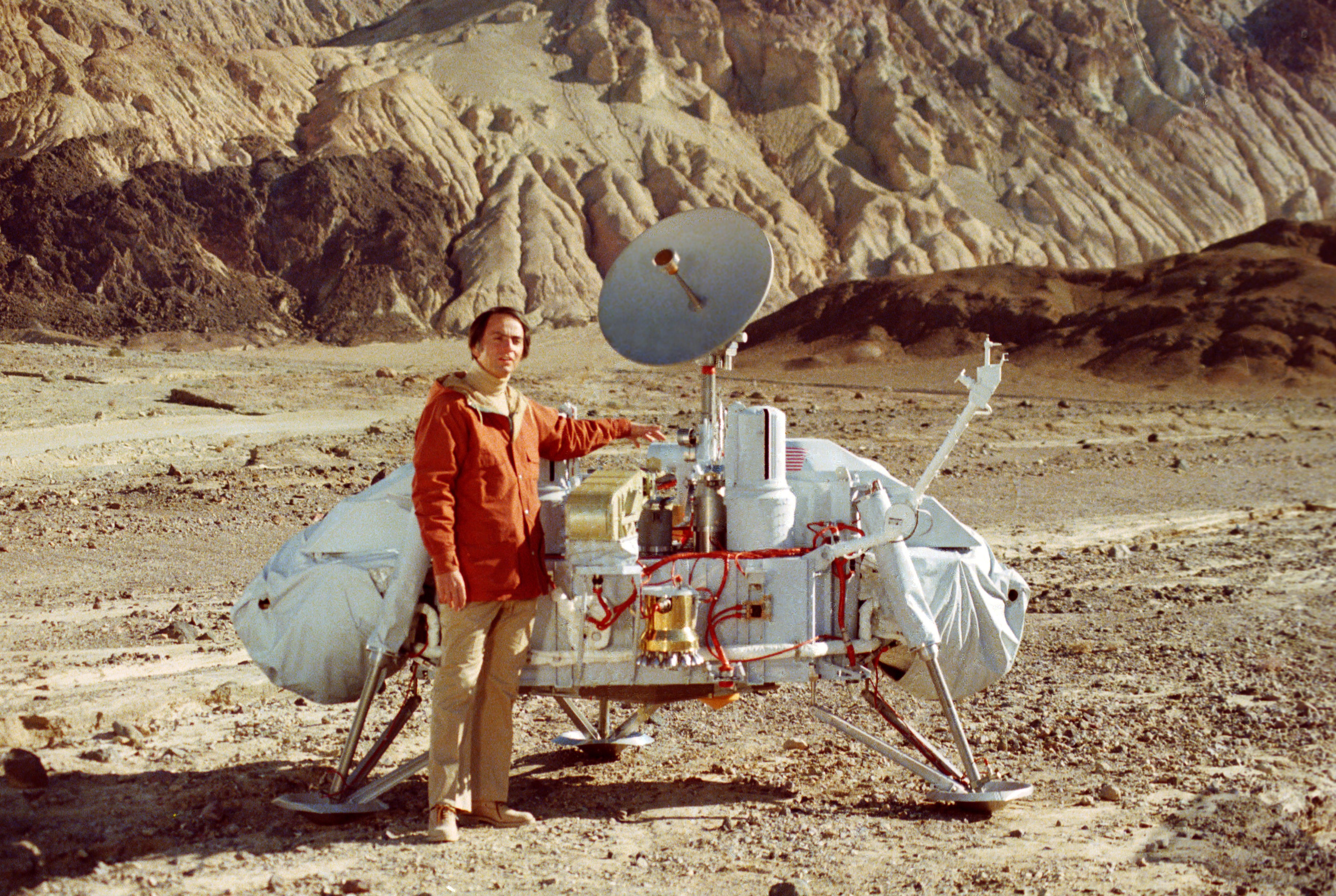
Reconnaissance
Mars is one of the planets visible with the naked eye - we have been watching it since antiquity. The Mariner missions of the late 1960’s and early 1970’s were the first time we saw it up close. Mariner 4 was able to take successful flyby photographs, and Mariner 9 was the first to successfully orbit. Early reconnaissance revealed volcanoes, valleys, and dried riverbeds. By the end of Mariner 9 in 1972, Mars was a prime candidate in our search for life.
Space missions provide enough study for multiple generations, and are gifts to our future selves. Whatever the truth will turn out to be, the search for life is well worth continuing.

Search Amidst The Dust
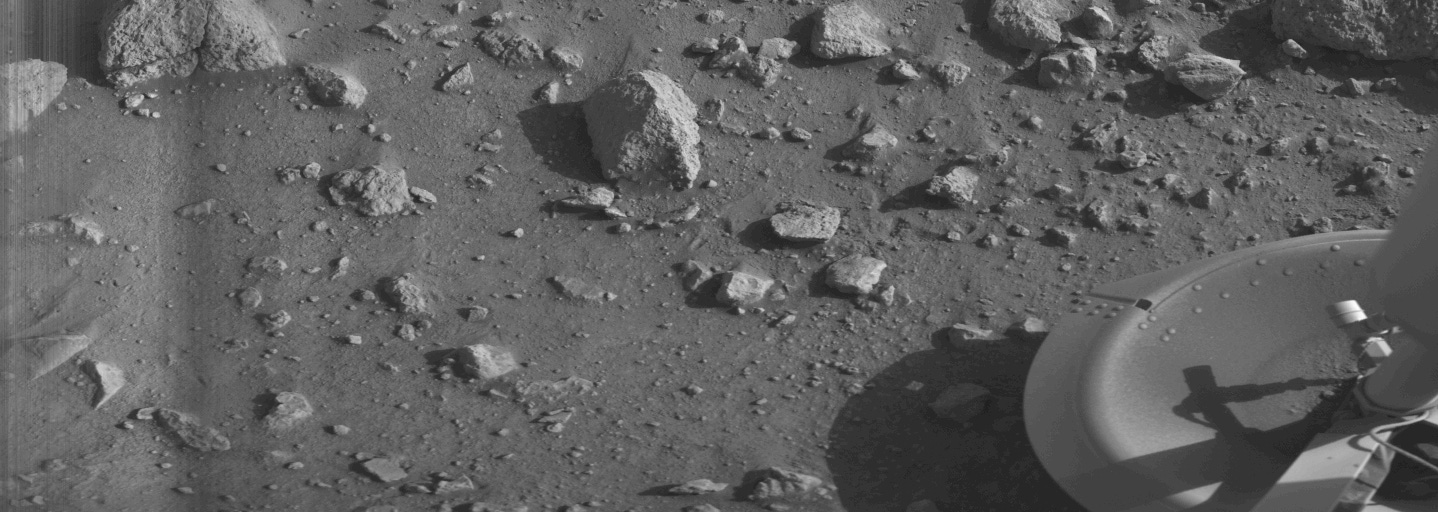
Viking 1 touched down in the summer of 1976. The program held three science objectives:
Obtain high-resolution images of the Martian surface
Characterize the structure and composition of the atmosphere and surface
Search for evidence of life on Mars
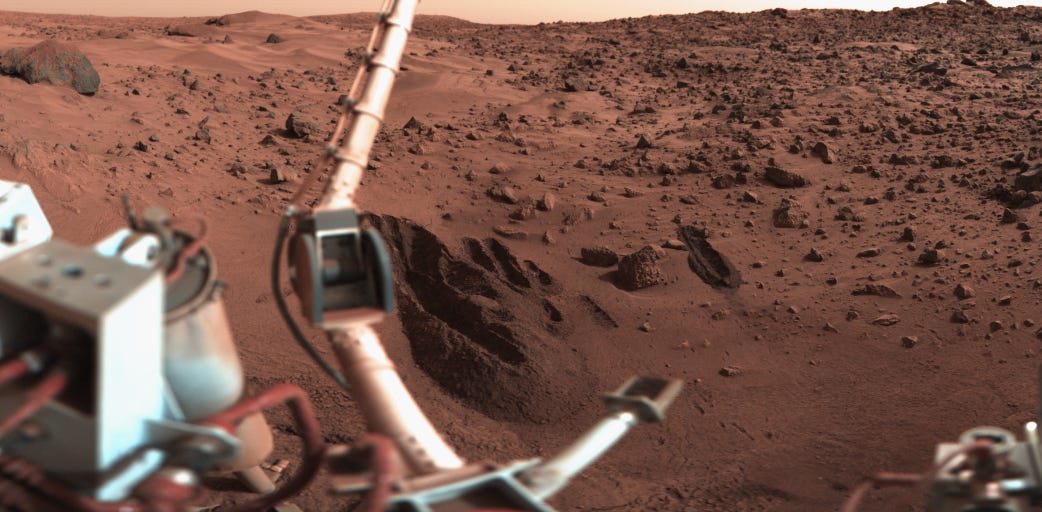
One of the techniques used to search for life was Labeled Release (LR). It begins with a small amount of radioactive Carbon-14 released into a soil sample. If life is present, it may metabolise that Carbon and produce waste Carbon Dioxide. This waste would incorporate the distinct Carbon-14, allowing it to be detected and attributed to biological processes.
While the first two science objectives were well achieved, the search for life was inconclusive. Although some data was tantalizing, conclusive evidence for life was not observed before Viking’s sign off in 1982.
Reanalysis of the Labeled Release experiments was conducted by Bianciardi et al in 20121. The scientists show some Viking observations are consistent with biological processes, and are better explained with rather than without. Re-evaluations like these show discoveries can be made decades after data is collected. Space missions provide enough study for multiple generations, and are gifts to our future selves. Whatever the truth will turn out to be, the search for life is well worth continuing.
“We believe that these results provide considerable support for the conclusion that the Viking LR experiments did, indeed, detect extant microbial life on Mars.” ~ Bianciardi, G et al. (2012)
Long Awaited Wonder
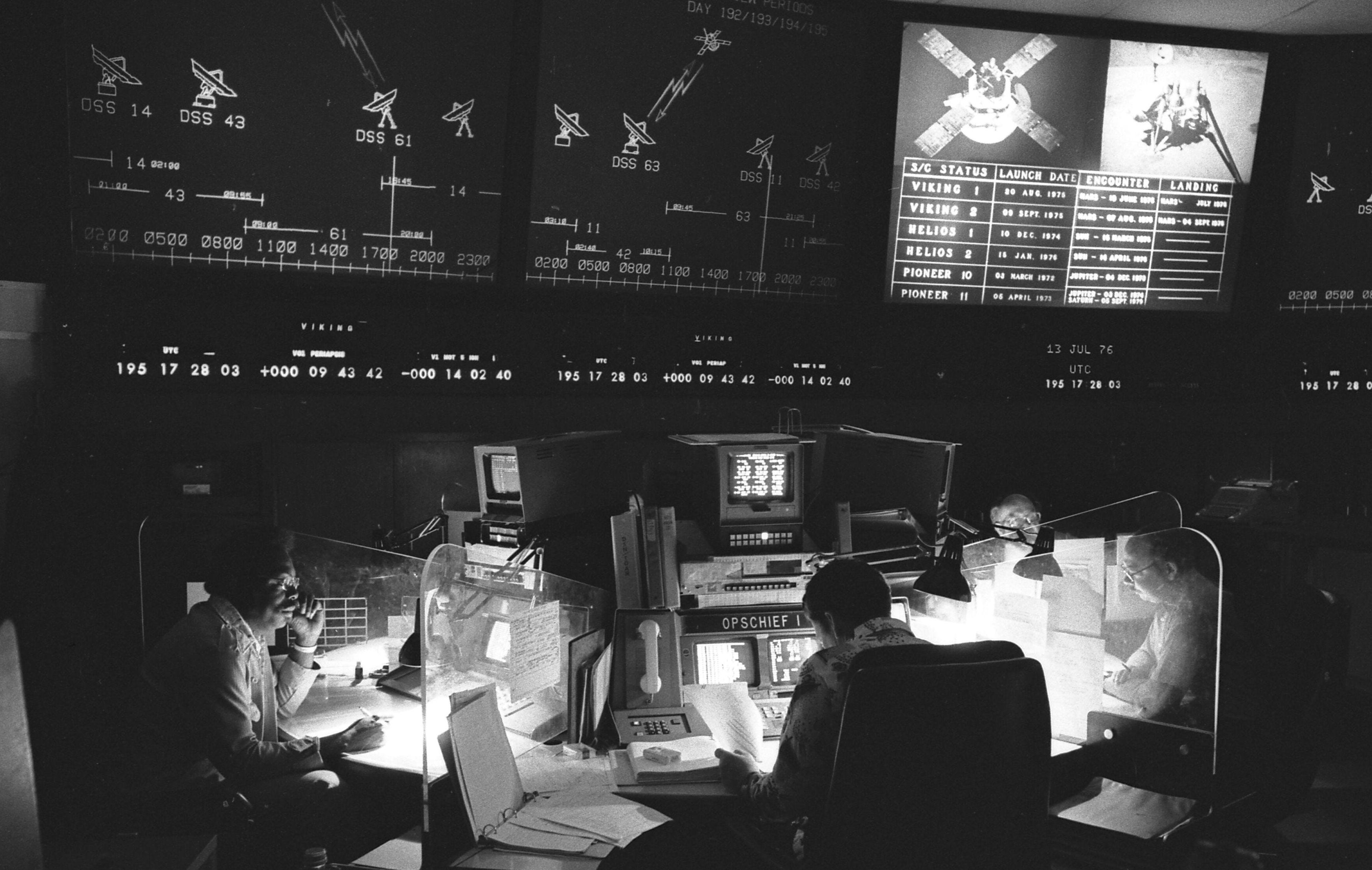
The legacy of Viking - for a fraction of the dollars - is larger than Apollo. It did not arrive with the same fanfare, nor did it achieve the same celebrity. Viking 1 was a stationary lander, sending photos of the only horizon it could see. In the decades since, many spacecraft have followed: Many rovers, many orbiters, and perhaps one day people.
The Apollo missions were marred with geopolitical jostling between the United States and the Soviet Union. The objective was to dominate and to demonstrate indirectly on Luna the capabilities of their weapons.
Viking 1 was no such statement. It was the first mission ever accomplished with the goal to search for signs of other life. As seen by the recent cancellation of Mars Sample Return: There is fear of that question. There is fear in losing station as the only life we know. There is fear the universe may be much richer than it appears.
The legacy of Viking is the search for life beyond Earth. Be it found by Viking itself, by scientists revisiting data, or some future mission, we owe some of that discovery to people 50 years ago. There is humility in that search, and the voyage to other life may have many stops along the way.
But should we find them: Viking we shall go!
Bianciardi, G. (2012, March 30). Complexity Analysis of the Viking Labeled Release Experiments. International Journal of Aeronautical and Space Sciences. The Korean Society for Aeronautical & Space Sciences. https://doi.org/10.5139/ijass.2012.13.1.14
Great article, Max! I enjoyed this a lot, and frankly, I had no idea the possibility of microbial life was a point of contention with the Viking lander. I would be curious to hear more of your personal thoughts about how you imagine this fear of other, specifically microbial, life being discovered anywhere in our solar system. This is such an interesting scenario; I'm curious how it would affect geopolitics, etc...
Also, do you know of Kelly Richardson's work? She's a Canadian video/digital artist and uses a lot of space/science fiction themes in her work (she was also my thesis supervisor for my Master's degree). She has a really cool Mars video she made: https://buffaloakg.org/artworks/20132a-c-mariner-9
Viking, and later the Voyager missions, expanded our scientific understanding of distant worlds in ways we could never have imagined. And they did so half a century ago.
Since the New Horizons mission, there have been virtually no other scientific feats on that scale.
Will we return to the Moon? Fine, but have we forgotten about the other planets? Or do we think we already know everything we need to know?
I lived through the era of those space missions: they represented the very best that science and technology could offer—not just for a single country, but for all of mankind.
Today, that era is over; we’ve turned the clock back to the “Moon” era, and from there we want to start over, following a much more limited and treacherous path.